Showing posts with label launch. Show all posts

Monday, 18 February 2013

The 36-Month Pregnancy

Click for more info
By Julie Kibler

The average gestational period for a chipmunk is 21 days. No wonder they speak with such squeaky little voices.

For a kangaroo it's 42, though the joey moves into the mother's pouch for another two to three hundred days.

For a lion cub, it's 108.

For a woolly little lamb, it's 150.

Gorillas and hippos and moose (meese?) are close to human gestational periods at about 225 to 260 days.

Human babies? 266.

In all three of my human pregnancies, my average 255 or so days of lugging each little one around inside my uterus seemed like FOR. EH. VER.

Little did I know I would carry my unborn book around for much longer than that. For the length of FOUR human pregnancies.
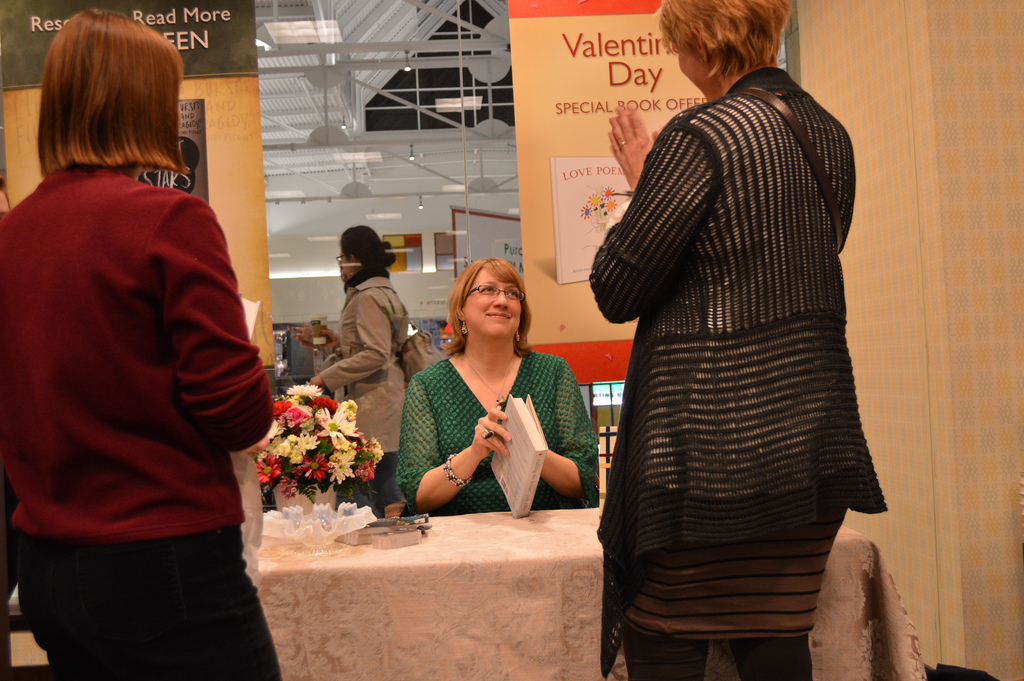
I think I look pretty good for having just given birth to a book after a 36-month pregnancy.

Indeed, from the time I began my outline until Tuesday, February 12, when my book baby, Calling Me Home, popped, it was 36 months. Except, I had--more or less--two semesters, because I don't even want to count the trimesters if we're talking three-month intervals.

I outlined, wrote, and revised for 18 months. I sold the book, and performed my part of the tasks related to growing it from sold manuscript to real book baby in 18 months.

But I will tell you that all the backaches (revisions), the constant bladder pressure (copy edits), the heartburn (page proofs), the mistaken sonograms (changed covers), the swollen feet and ankles (checking amazon rank 432 times per day), and--most of all--the labor pains (writing about yourself in interviews and Q&As until you can't remember your own name, much less anything interesting you haven't already said four times) don't mean a thing when it comes down to one moment in time:

The moment you stand before your family and friends and see the joy and pride and LOVE in their eyes.


My book launch, last Tuesday evening at Barnes & Noble in Arlington, Texas, ranks right up there with the BEST days of my life.

I had an amazing labor nurse--I only met her shortly before Calling Me Home hit the nursery, but Jessica Prigg was the nicest, most gracious Community Relations Manager I could have worked with. She even provided a box of tissues to keep handy at the lectern.

My critique group looks on as I read
from Calling Me Home
Because I did cry. I think the only other time I've truly cried with joy during this long, long journey was when I called my oldest child to tell him I'd sold my book. I think that's significant, considering he was the first human baby who made me cry tears of joy.

Tuesday night, the tears started when one of my beloved critique partners from my group blog, What Women Write, asked if I was nervous shortly before the event began. When I nodded, she leaned in for a hug and whispered in my ear:

"You've got it. And if you fall, we'll catch you. We always do."

My best friend Gail and me, next to cake and flowers
from her and my critique group
What author could ask for more than that? I mean, besides well over a hundred friends, family members, former bosses and coworkers, church members, neighbors, book club members, people from my dentist office, and the list goes on ... there in the delivery room, simply to encourage and support and listen to me (ME!) talk about a story I wrote with no guarantee this day would ever happen.

I realized, as I stood before these people, that NOTHING else mattered when it comes to this book. Not the sales numbers, the Amazon ranks, the lists, the magazine or news coverage, the good or bad reviews--the good times and the bad times, whatever was and is to come for Calling Me Home.

All of that pales in comparison.

What mattered was right there in front of me.


Photo credits: Rick Mora

Thursday, 10 January 2013

An Open Letter to Debut Authors: Five Things to Consider


Dear Debut Author,

 A year ago, when I launched my debut novel , I told myself that I would throw myself into the next twelve months and do all I could with the resources I had to bring my babe into the world. It’s been a wild and crazy ride (as Steve Martin might say).  These past twelve months, I’ve felt emotions in concentrated, hyper-potent doses. I’ve been wistful, happy, and everything in between; seasoned by all the events and people I’ve met, mistakes and victories I’ve experienced. I’m both sober and inebriated. I have a long way to go, and much to learn, but I hope you’ll consider these five things as you step into your debut year.

Thing #1 – Delight, enjoy and celebrate your launch.  You’re a debut author once. That’s it. Embrace your accomplishment.  Give yourself time to breathe in your feelings of pride and happiness—yes—happiness!  If you have to disappear into your bedroom closet to shout, do it! Hug your old clothes. Spill your pent up tears. If you start blubbering with gratitude because a bird landed on your front walk, ride the sensation—sob away. Be a sentimentalist. Be melodramatic with joy. You’ve worked hard to achieve this, harder than most people will ever understand. 

Thing #2 – Pace yourself. You will reach stations of utter exhaustion, moments when you are overwhelmed, and confused. You will tell yourself not to complain. You will tell yourself: This is my dream, how can I stop pushing, doing, trying every day?  Well, here’s a silly joke:  

“Knock. Knock.”

“Who’s there?”

“Human.”

“Human who?”

“Human who needs sleep. Human who needs routines. Human who needs healthy foods to function at debut author speed.”

Seriously. You will push harder than you thought you could. But, you will hit that wall of fatigue. You won’t know you’ve bumped into it until your head hurts and your mind is whizzing around Venus—hot and fiery. That’s when I’d like to suggest you take a break, a few days off to parent yourself.  Don’t worry. You’ll be back at it. You’ll book another reading; you’ll write another blog post, you’ll answer more q&a’s, but you must pause or you will burn up.  Your psyche will disintegrate. Respect the demands of your particular lifestyle, family and financial constraints. Surround yourself with people who make you feel good, who want the best for you.  You are the boss of your life.

Thing #3 – Beware of Goodreads Reviews. (Okay. Laugh.)  Every author I talked to forewarned me: “Goodreads is particularly nasty,” they said. “Not everyone will love your book.”  You will listen and nod and be grateful for the cautionary advice, but privately you will want to be that one exception.  You won’t be.  No one is. Not Dickens. Not Jane Austen. Not YOU.  You will get that cranky, stupid review, the one where a reader can’t or won’t understand your character, will refuse to understand why your book has swears or sex. My cheap advice?  Don’t engage. Let those nasty reviewers fade away. Most will. (You can always vent with fellow authors. They will happily vent with you.)

Thing #4 – Let surprises…surprise you.  A reader you’ve never met will fall in love with your book, rave about it, pass it on to his or her friends, blog about it, cheer you on Twitter and Facebook.  It’s not a fluke.  It’s what you hoped for but it will still come out of the blue, unexpected and thrilling. It’s one of the most wondrous events, a gift from heaven designed especially for authors.  Soak it in. 


Thing #5 – Do everything in your power not to compare yourself with other writers and their books.  Comparing is an animal that seeks out sink holes, swamps and depression.  You’ll follow it anyway. But keep a tight leash on it. Life is fickle. Readers and reviewers are inconsistent. But you can remain constant about yourself.  Don’t compare. Just don’t.

Now, return to Thing #1 - Delight, enjoy and celebrate your debut year.  Congratulations! 

Warm wishes and good luck!

Jessica Keener   
Author of Night Swim

Thursday, 7 June 2012

When I Am Forty, I Will Publish a Book


1. I am turning forty today.

2. I am not Herman Melville.

3. I am vulnerable to weather.

These are the three disappointments of the day.

Last year, on my birthday, somebody died. That was a different disappointment.

Last week, I took a canoe trip with my two children on the Allegheny River. One minute we were floating lazily along, and I was taking pictures of different sunbathing rocks that would have looked like the one that my main characters Sunny and Maxon were sitting on when he proposed. The next minute, the air turned chill and I heard thunder. We tried, valiantly, to make it back to the canoe rental place and get safely into their office or our van. However, we ended up blown across to the wrong side of the river. We climbed out of the canoe and pulled it up into the rocks, and spent the next half hour or so clinging to the slippery side of a large boulder, unable to see or speak because of the strength of the thunderstorm that was raining down on our heads. In the river valley, thunder almost deafens you. We were afraid to go into the trees, the canoe was swamped and barely above water, and it was all bad.
My daughter is eight and weighs about 40 pounds. My son and I tried to make a roof over her with our bodies, but she was shaking terribly from the cold and driving rain. I was very positive, very calm and sure for the children, but the thing that was raging in my head, and the thing I was screaming at Dan later on the phone, was that nature was doing a very good job of reminding me that I am very small, and very weak, and that the world does not care if one person drowns in a river on a Saturday, or if one child gets hit by lightning while freezing on a rock. I live my life in a bubble of technology and communication and abstraction. Then I come out of my bubble, feeling as invulnerable as an idea, and put my proud ass in a canoe, and then a thunderstorm comes. I was wearing a *dress*. How stupid and vain.

So, I am vulnerable to weather. And on top of that, I’m not Melville.

I can remember when I was 32. Actually, it was when I was turning 33. Melville wrote Moby-Dick when he was 32, and I had always felt, in some hubris-soaked part of my overachieving little brain, that by the time I was 32, I would have something massive to say to the world, like Melville did. I felt that I would write my “magnum opus.” As I turned 33, I can remember crying to Joshilyn on the phone that I had failed, that I had gotten old, that I had nothing to say.

The year I was 32 was also the year my mother died, the year I was pregnant with my daughter and struggling to parent my son, the year I was trying (again) to write Shine Shine Shine only with three female main characters instead of one, and it wasn’t working. None of it was working -- not being pregnant, not parenting, not having people stay alive, and not writing my novel. So because this ridiculously arbitrary age of 33 came and I had not produced a noble work of timeless majesty, I cried and pissed around and moped. And felt spent. There were lots of times that year I felt like giving up. How stupid again, and how vain.

Today is my birthday. Last year, on my birthday, somebody died.

She was legally my sister, biologically my aunt, functionally my parent. She was not that old: 67.  She died with about a hundred to-do lists scattered around her house. I found them as I was sorting and cleaning. One of her favorite things to do, it seemed, was to buy a new notebook, open it to the first page, and write out an enormous to-do list. The lists I found over those weeks of organizing dated back a long way. They included huge projects like “Empty the Garage” and “Sew Five Outfits” and “Lose 20 Pounds” and “Plant Vegetable Garden.” It was both heartbreaking and horrifying to see how ambitious these lists always were, and to realize that she never crossed anything off. This is not to say that she never did anything. She did plenty. But not these things. She died with all these lists full of lofty, noble, challenging goals, and they were collecting in drifts around her house, and she’s dead now, and they mean nothing.

Her death was unexpected. It’s possible that she felt, like I feel, invulnerable to death and danger, that she felt it couldn’t actually happen to her, she couldn’t actually die, not with all those lists and all the intentions she had. After all, I did survive that thunderstorm and flood. I didn’t drown or get burned up in lightning. It could be I am invulnerable after all. To death, to aging, to weather, to an adjusted timetable for success. I could still live forever, AND be Melville, AND walk through fire.

1. I’m turning 40 today. (If I say it enough times, it will seem real.)

2. I am launching a book this year.

3. I am able to survive a thunderstorm, outside, in a dress.

These are the three celebrations of the day.

All of this has really happened: I aged. I coasted through 33 without a novel. I have loved my family, I have parented my children, I have supported my friends. And here’s the big thing I have to say to you today about something that really happened too. My life to-do list has always had one giant and blazing bullet point: WRITE A NOVEL. That has been done. It came late, and took a long time. I am older than I thought I would be and sadder than I thought I would be, but I am here. I’m proud to show you the book trailer for Shine Shine Shine: not “before I turn 40” or “in my youth” but right now. Happy birthday to me. 


Like the song “Robots”? The music from the trailer is available for free download here: The Virginia Janes. Happy birthday to YOU.

Friday, 1 June 2012

When Your Book-Baby Isn’t The New Kid On the Block Anymore

by Sophie Perinot

When you have a brand new baby everyone wants to see it.  Relatives travel  to admire the latest addition to the family.  Neighbors cross the street to peek in your stroller and declare how cute junior is—even if he looks like a little bald, red-faced monkey.  More than this, everyone wants in on the parenting action.  Your sister-in-law has naptime tips.  Strangers at grocery stores ask incredibly personal questions and offer unsolicited advice.

Bleary-eyes, sleep-deprived and feeling far from glamorous, you are not in any sort of shape to enjoy all this attention.  You swear—usually under your breath on the way to your car lugging that ridiculously heavy infant car seat—that you wish everyone would just fade away and stop calling at the precise moment the baby is napping and you are trying to squeeze in a shower.  Yes, you are delighted that everyone admires the baby but ENOUGH IS ENOUGH.

It’s pretty much the same thing for a debut author during the immediate post-launch period.  Minus the poopy diapers of course.

Your family and friends call or email in a continuous stream congratulating you and asking “how are sales?”  Book bloggers want guest posts—now, now, now!  You can’t walk into a bookstore without seeing your book on the tables and God that’s a rush.

For the first few weeks you are okay—after all you didn’t need an epidural or stitches to deliver this baby.  But somewhere around the 30th stop on your world-domination blog tour, you begin to run out of steam.  You aren’t sleeping like you used to because, um, you have this other book you are supposed to be writing.  You’ve run out of ideas for guest posts that might go viral.  And, like new parents the world over, no matter how confident you seem you are not entirely sure you are doing this right.  You want things to JUST CALM DOWN ALREADY!

And then they do.  Right around the three month mark.

Your book is no longer “what’s new” or “what’s next.”  It’s just like hundreds of other cute little toddlers out there, standing next to their new baby brother while everyone “ooos” and “ahs” over him.  And far from being happy about this shift in attention, your book is thinking (well, it is inanimate so you are thinking) “what the hell’s so special about him?”  OUCH. I know.  I’ve been there (actually I AM there right now).

This can be a demoralizing time.  You may find yourself unable to focus on your latest manuscript even as deadlines grow closer.  You may find yourself thinking, “Why did I think I wanted to be published?”  I mean all that work—the writing; the looking for an agent; the checking your email every hour while your agent pitched to publishers; the edits, copy edits, page proofs, etc—yet in less than 1/4 of the 12-18 months it took from signing your publishing contract until your launch some stores aren’t even carrying your novel anymore.  Is it any wonder you have an author’s version of post-partum depression?

So what can you do?

First, remember none of this sudden dearth of attention is a reflection on your book-baby.  Your novel is still compelling.  Your cover is still eye-catching.  It’s just not brand new anymore.  Honeymoons end.  You don’t look at your husband of 10 years the same way you did when he was your husband of ten days (and if you do, I’ll have what you’re drinking).  The great cultural eye has shifted on to new targets.  Somebody else’s book baby is the hot young thing.  That doesn’t mean that thousands of people aren’t out there reading your book right now and enjoying the heck out of it.

Second, understand that you are not alone.  It’s easy to feel that way because authors—like others whose jobs include putting on a public face—are conditioned to project an aura of confidence and success.  Next time you see a tweet by a fellow author exclaiming over her wonderful book signing, remember that behind the “rainbows and unicorns” prose there may have been fifty chairs with ten bodies in them.  Most authors don’t become overnight sensations and New York Times best-sellers with their debuts, yet they go on to have productive and fulfilling authorial careers.  You are in the majority here kiddo.  Focus on what brought you into this business in the first place—the writing.  You love that right?  So do it.  Go back to a work day that is more about the next book and less about the one that has already launched.

Third, reach out to other writers for support.  Book parenting is just like regular parenting, when you are most worried and in need of advice you are least likely to ask for it.  Why?  Because asking for advice means admitting you need it—that you have doubts and that maybe, gulp, you or your book aren’t doing as well as you expected to be.  You might be wondering, “what if I admit I am feeling down, or disappointed, or worried and everyone else just looks at me with pity because their lives are perfect?”  Yeah, you may get some of that.  And you will find a certain portion of people—usually those behind you in the launch timeline—who are very willing to believe it’s you.  Time will cure that.  But I can guarantee you will also find veteran writers (or debut writers who are just a little further along the trail than you are) willing to say, “yeah, I’ve been there,” and who are willing to offer you tried and true tips for dealing with “middle child” syndrome and all the attendant insecurities.

Finally, own your feelings and don’t be embarrassed of them.  It’s okay to miss being the center of attention.  It’s okay to find that the reality of parenting (either a baby or a book) doesn’t always meet the glowing hype that precedes it.  Problems not owned don’t get solved.  You’ll be glad you broke the code of silence.  I am.

Monday, 16 April 2012

What To Do When There's Nothing Left To Do


by Wiley Cash

When I was a kid, I watched the movie Space Camp. At the time, I was really interested in science, and, although I’d never even flown in an airplane, I was thinking it would be pretty cool to be an astronaut. To be honest, I was a pretty impressionable kid; I’d read Pistol Pete Maravich’s biography and started spinning the basketball on the tip of my index finger and wearing floppy tube socks. I’d been so blown away by M.C. Hammer’s album Please Hammer, Don't Hurt 'Em that, in the sixth grade, I plagiarized the lyrics to “Pray” for an essay on “how to make the world a better place.” With skills like that, being an astronaut would be simple.

Space Camp is about a group of kids who go to a camp at the Kennedy Space Center. One day, during a simulated launch, the gang is accidentally shot into outer space. Like anyone would be who isn’t old enough to operate a car, the kids face their share of interstellar challenges. One of those challenges has always stayed with me; at the end of the movie, they begin to run out of oxygen, and they have to hold their breath in order to survive. I’ll never forget that one character tells a story about a friend who can hold his breath forever just by thinking about French fries. This scene scared me to death.

I’ve never been one for cardio; I’ve never been a strong swimmer or a strong runner, and I couldn’t imagine being forced to hold my breath, regardless of what was on my mind to distract me. I was wrong; my first novel, A Land More Kind Than Home, sold to William Morrow in December of 2010, and it’s being released tomorrow, a full fourteen months later. I’ve been holding my breath for almost a year and a half. It turns out I do have the lungs to be an astronaut, or I can at least hold my breath long enough to help a young Tate Donovan and an even younger Joaquin Phoenix bring the shuttle home.

Over the past few months, especially the past few weeks, I’ve often felt like I was in a cramped shuttle cabin, growing light-headed and dizzy, blood pumping in my ears. I’ve spent less time thinking about the novel’s actual release and more time thinking about how to prepare for it. I’ve written blog posts, traveled to conventions, sat for interviews, and spent more hours than I care to admit plugged into Facebook and Twitter. For a guy who’s never downloaded a song and has no clue how to use an Ipod, it’s been quite an adjustment. To put it simply: I’m sick of me, and I’m sure other people have gotten pretty sick of me too. But such is the mania of publishing your first novel, or so I’m told by others who have done it.

It makes sense that preparing for it can make you crazy. Shortly after my book sold, one of my best friends and I attended a writing convention in Washington, DC that featured an acres-sized book fair, full of more tables and books and authors than I’d ever seen in my life. It seemed that there were more books than there were people to read them, and I remember asking my friend how I could ever expect my book to find its way into readers’ hands.

We like to think that the job of the writer is to write and that the job of promoting, toting, and devoting others to said writer’s book falls to someone else. For the most part, this is true. I have an absolutely wonderful publicity and marketing team on my side, and everyday I take several moments throughout my day to be conscious of my good fortune, to live in the moment and marvel at the incredible turn my life has taken. But that doesn’t stop me from lying in bed at night, wondering if there is more I can do to get my book out there: more booksellers to meet, more Facebook posts to post, more 140-character comments to tweet.

At least tonight will be my last night having thoughts like these.

My novel will be out tomorrow, and at this moment there is nothing more I can do to make that release any more or any less successful. Already I can feel oxygen coming back into the cabin. We’re going to land safely, and everything is going to go back to normal. And I can finally eat French fries without having to think about holding my breath.

Thursday, 29 March 2012

A Case of the Whatifs: Pre-Publication Jitters

By Melanie Thorne

I’m going to tell you a secret. I’m scared.

It feels like there is some unspoken rule that I’m not supposed to admit this. As a soon-to-be-published author I should be over the moon with happiness. My book is being published! That’s amazing! Everyone keeps telling me how excited I must be, and I am, of course. It is unbelievably amazing to have sold this thing I started years ago, this thing that went from thoughts to words on a screen to a physical object in people’s hands. But selling a book is not the end of fear or worry or doubt that I think many writers, myself included, imagine it will be. It’s an accomplishment, a huge, wonderful, happily satisfying one for sure, but it’s not an eraser for insecurities. (Wouldn’t it be cool if that existed?)

Please don’t misunderstand my admission of fear to mean that I wish this wasn’t happening or that I don’t appreciate where I am. I’m thrilled—beyond thrilled—that this collection of my words, my story, will be an actual book in actual bookstores next to other real live books. I can’t wait to see what happens when she steps out into the world, how she’s treated, how far she travels, if people understand her. I also worry about what people will say about her behind her back, if she’ll make a good enough first impression, if readers will make promises they don’t keep and leave her alone on cold shelves.

You know that Shel Silverstein poem, “Whatif,” from A Light in the Attic? "Last night, while I lay thinking here,/Some Whatifs crawled inside my ear/And pranced and partied all night long/And sang their same old Whatif song.” I read it in first grade and was relieved to find it wasn’t just me who lay awake at night pondering both practical and ridiculous concerns. Some of the questions in the poem apply directly to my current book launch fears: “Whatif I start to cry? Whatif the fish don’t bite? Whatif nobody likes me?” Of course, my nighttime Whatifs have a million more hypotheticals with varying degrees of terrible-ness for me to mull over, and I bet yours do, too.

Hand Me Down is two weeks from publication. In two weeks this thing that I have slaved over, loved and hated (and loved and hated again), doubted, sacrificed for, and stressed about for years, this thing I invested time and energy and soul into, this thing that has so much of myself in its pages will be available for public consumption. I will be available for public consumption. Exposed. My life is going to change in ways I can’t even imagine, and along with being excited and hopeful, I’m also frightened.

I know some of you want to punch me in the face right now. Some writers out there who have not yet sold their books are thinking, Oh, boo-hoo, poor published author, and I get it. Two years ago I would have thought the same thing. When you’re in the throes of writing, your doubts and fears are about the project itself, about how it’s working, how the words fit together, how the story flows, and also about whether this project will ever make it out into the world the way you hope it will. The goal is to get published, and you’re convinced that if you can just reach that goal, everything will be okay. I am so thankful to have gotten to this point, and I would certainly not want to go back, but my fears and doubts didn’t suddenly disappear when I signed my contract, as much as I wished they would.

There are struggles at every level, but maybe that’s a good thing. Each hurdle is a chance to learn. Richard Bausch says, “Your doubt is your gift.” It’s what keeps us striving to improve our craft, tightening our language, studying the masters. When you think you have nothing left to learn—when you completely stop doubting your work—you stop getting better. Not that you shouldn’t be proud. You should. We should. I am. But as writers, we know how to persist. Our fears of inadequacy push us to work harder; the world’s skepticism strengthens our resolve, which is something I need to remember as I head into publication mode. My doubts will force me to study, to practice, to improve each step of the way. My fears will motivate me to prepare. I will come up with an answer for every single one of those nighttime Whatifs, and I’ll be as ready as I can possibly be when my book baby leaves the nest.

In two weeks my life is going to change in ways I can’t even imagine. Am I nervous? Yes. Can I handle it? Yes. And you never know, Whatif everything turns out better than I could dream?