Showing posts with label secondnovel. Show all posts

Monday, 7 January 2013

The Ghost of Novels Past


by Barbara Claypole White 
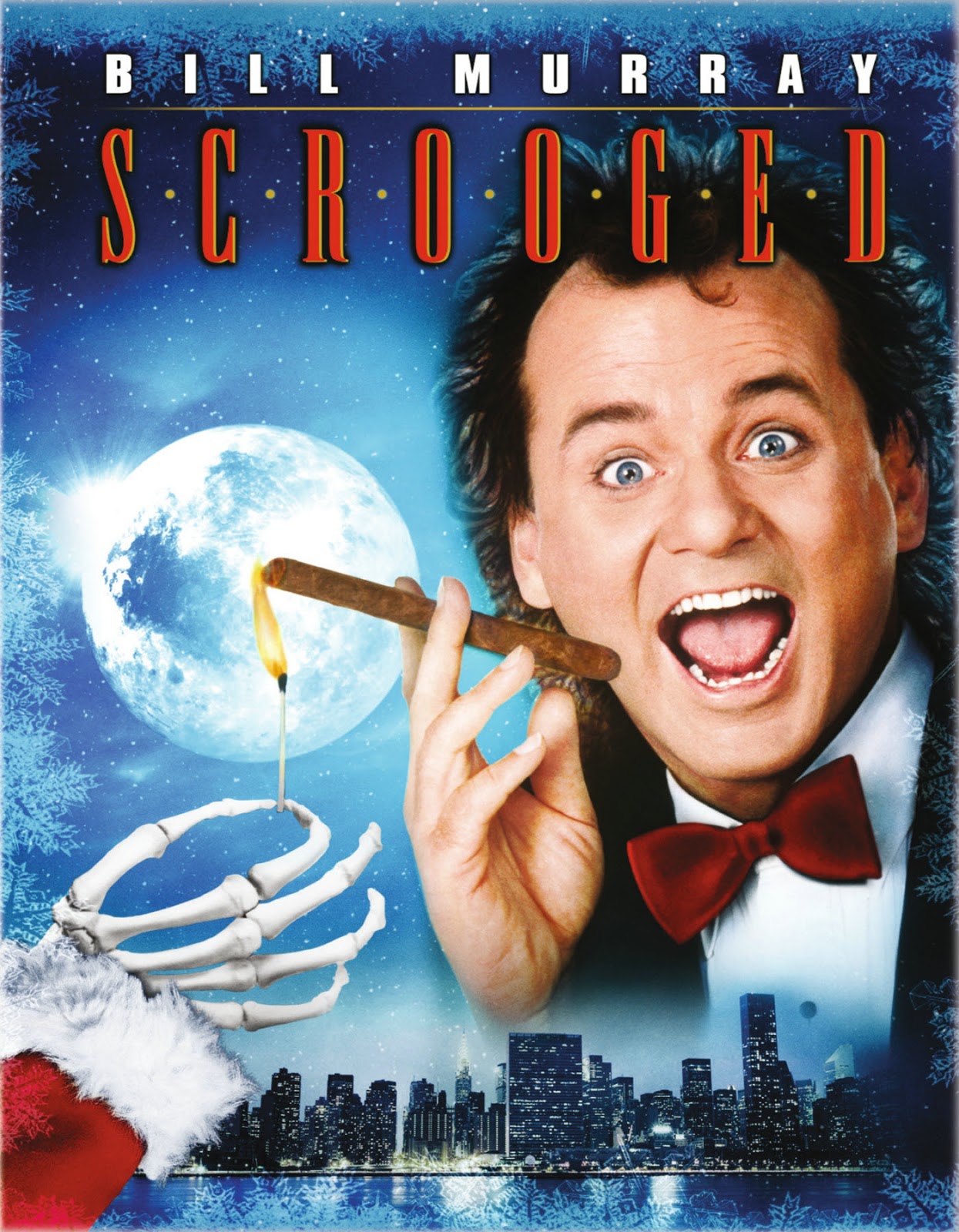

Remember when Bill Murray’s character in Scrooged dropped to his knees and sang, “I’m alive”? Well, that’s how I feel. My second novel, Dancing At Dusk, landed on my editor’s desk twenty-four hours ago, and finally, I’m ready to enjoy my decorations and crack open the festive mood. I know, I know—it’s the second week of January, and we’re the only house in the neighborhood with a Christmas tree, but the writing life follows its own calendar.

My mind is still stuck on all things Christmas, and I’ve been wondering: If the ghost of my first novel were to turn up and take me back through the year, what would I learn?

You can write another book:
When I landed a two-book deal, I freaked. The idea that I had to produce a second novel in one year was terrifying to me, and eclipsed all joy. (The Unfinished Gardenevolved over ten years.) While everyone else celebrated my publishing contract, I hyperventilated. I had one novel in the closet—a really bad one—and a ghost story in first draft that was not even close to being a sibling for my women’s fiction debut.

But with input from my agent and editor, I took the seed of that ghost story—dumped the ghost and my heroine—and started researching what would become Dancing at Dusk. And here I am, sniveling into my Kleenex because my new baby is all grown up and leaving home, and I miss my characters. (I love you, Will!)

Which is why you should…

Love what you write, write what you love:
Only one thing pulled me through the trauma of birthing my first novel: falling in love with my second.  Writing is hard work, and finding time to write while you’re promoting a novel is hell. Find the time. Even one hour locked away with your characters can help you breathe again.

You’ve got to have friends:
At the risk of sounding like a Randy Newman film score, you’ve got to have friends. Their excitement can pull you through the terror and the sleep deprivation. Three girlfriends threw a launch party for me—with a sleepover—and that was the only part of the launch that I enjoyed. Don’t assume you’re too busy for your friends. Get drunk with them or meet them for lunch on the weekends. It’ll make you feel like a normal person—with a life.

Ignore nasty reviews:
Believe everyone who tells you to ignore bad reviews. Yes, it’s totally shit that someone who got your novel for free and hated it couldn’t take the moral high road and think, “Thank God I didn’t pay for the damn thing.” Engaging with reviewers who don’t like your novel just empowers them to come after you in other venues. I can only repeat myself: You’ve got to have friends. Because they will listen to your angst, have a glass of wine with you, and help you cast voodoo spells.

Keep your writing partners:
Don’t walk away from your critique group. I could not have wrestled novel two into shape without brainstorming sessions with my writing partners. I’m also incredibly grateful to my five readers who provided excellent feedback on the second draft. Don’t assume your agent or editor is going to do everything, because…

Everything comes down to you:
I saw a direct correlation between my promotional activity and sales. For example, since my beloved hero in The Unfinished Garden is obsessive-compulsive, and my son has battled OCD for most of his life, I wrote a blog post during OCD Awareness Week. Twenty-four hours later, I hit the highest point ever in my rankings on Amazon.

You cannot, however, promote your novel 24 /7. Well, I guess you could, but you might end up in restraints. Figure out what you can do realistically—factoring in time and budget—and make it happen.

I had great coverage in the local press, but I worked hard for it. I will definitely do so again. I also hired TLC for a blog tour, which I plan to repeat, and I’ve earmarked promotional dollars for Author Buzz. My one big regret is that I didn’t have postcards printed for TUG. This is top of my to-do list for DAD. (I’ve watched my wiser Book Pregnant buddies use postcards with great results.)

Keep eyes wide-open at every stage, because…

Editing is in the details:
Double, triple, quadruple check. There was a glaring error on the back cover copy for The Unfinished Garden, and it had been up on Amazon for a least a month before I noticed. It took months to get fixed, and I lost way too much sleep fretting over one mistake. When the back cover copy came for Dancing At Dusk, I pored over it. Actually, I rewrote it with my editor’s help.

Before every stage of editing on DAD, I plan to reread the manuscript twice. Once isn’t enough. There are going to be mistakes, but you can limit them if you’re hyper-vigilant.

A while back, I read what would have been a wonderful novel, but I couldn’t enjoy it because every character ‘chuckled’ constantly. After a few chapters, all I could think was, “How come no one caught this?” Don’t let your novel be a chuckler.

If you have problems with the cover, say so:
It’s a fine dance figuring out how much control you have over the cover, but if something bothers you, speak up. No one will think badly of you for voicing an opinion. MIRA produced a wonderful cover for The Unfinished Garden, but there were a few tweaks along the way. And yes, some of those came from my input.

You need blurbs:
Don’t pussyfoot around saying, “Should I; shouldn’t I?” If you want a blurb from someone, ask. Worst-case scenario, he or she says no. Blurbs are super useful for promotion, and the bottom line is that every novel has them. Without a blurb or two your book baby looks unloved.

Rehearse what to tell friends and family who expect signed copies:
Newsflash, people: We have to buy our books, too! Develop a relationship with a local Indie so you can arrange signed copies through them.

Learn when to let go:
You can’t spend your life beating the promotional drum or worrying about sales figures for your debut novel. Like waving your real baby off to college, you have to let go and trust that your firstborn book will make its own way in the big wide world.

And then, maybe, when you meet the Ghost of Novels Future, you’ll have loads of titles on The New York Times Best Seller List. That’s what I love most about Christmas: It’s the season of hope.


Barbara Claypole White is the author of The Unfinished Garden (Harlequin MIRA, 2012), a love story about grief, OCD, and dirt. Dancing At Dusk will be published in November 2013. You can find her on Facebook.

"The Unfinished Garden is a powerful story of friendship and courage in the midst of frightening circumstances… I highly recommend this wonderful love story.” Bergers’ Book Reviews

“White…conveys the condition of OCD, and how it creates havoc in one’s life and the lives of loved ones, with style and grace, never underplaying the seriousness of the disorder.” Romantic Times 4* review


Friday, 28 December 2012

The Waiting Game

by Anita Hughes

When I was pregnant with my first child, I spent a lot of time waiting. I waited to feel the first kick, I waited for my monthly pre-natal visit, I waited for Lamaze classes to begin. Each event seemed to take forever to occur, but each event also brought me closer to the birth of my son. I spent nine months being impatient, excited, terrified and finally overjoyed when I delivered him.

Being book pregnant is much the same thing. Waiting for one’s book to be released has many watershed events – the first time you see your cover, your first pass pages, when you receive blurbs from other authors or get early ARC’s. Each of these events seems to arrive with the speed of a horse and buggy, but they do eventually happen. And each time they do, they bring you one step closer to holding the finished book in your hand.

As I await the publication of my second book – MARKET STREET – which will be released on March 26th, 2013 by St. Martin’s Press, I like to think I have learned something from the release of MONARCH BEACH last summer; just as when I went through my second pregnancy, I tried to learn from the first. What I am trying to embrace is: Enjoy the wait.

There are few events in life which live up to the anticipation surrounding them: a two hour child’s birthday party rarely matches up to the nights spent dreaming about the big day. Vacations that are booked months ahead can be plagued by poor accommodations or inclement weather.

Your wedding day and the birth of a child usually far exceed anything you could imagine. They are worth the months of slowly peeling off calendar days. They are moments you will never forget.

The release of your book may not match your matrimonial union or the first sight of your newborn, but it as an exciting, once in a lifetime moment. It is a time that as soon as your book has been accepted for publication (now that is a wonderful day!) you know will eventually arrive. So, as I tell myself, kick back, watch a foreign movie or indulge in reading your favorite author, and enjoy the wait. Publication day will come and then you will have to find something else worth waiting for.

Wednesday, 28 November 2012

Book Baby Two

Baby Number Two, Or...  How to Survive a Difficult Pregnancy
In real life, my first two sons are fourteen months apart.  You would think after giving birth once, the next time would be easier.  You would be wrong.  My second son had the cord wrapped around his neck and was in distress.  The obstetrician had to take him quickly.  I did not have a Caesarian because he was almost born when he got into trouble.  The more he struggled to emerge from the womb, the tighter the cord pulled.  I remember being cut and feeling every snap of flesh before I passed out from the gas they were giving me.  When I woke up, three days later, my son still had blue lips and a purple face.  He was still in the incubator and I had to sign a paper giving permission to operate on his skull in case there was fluid on his brain.  Thankfully, he was fine.   But it took me a long time to recover from that traumatic experience.

I feel a little bit like that with my second book-baby.  I’m long overdue, and this time is not nearly as easy as the first.  Of course, being diagnosed with stage 3 uterine cancer last January did not help things.  First, I had a radical hysterectomy, followed by chemo and radiation treatments.  I had turned in the first draft of the book to my editor, who had many suggestions for improvement.  I was determined to get another draft for him, but it has taken eleven months so far.  I still have a month’s work to do, at the very least.  Luckily, he and my agent have been wonderfully understanding and patient.
I supposed chemo treatments might be compared to morning sickness.  There is nausea and extreme fatigue.  The brain doesn’t work as well as usual.  There is the constant fear that something will go wrong.  But, just like in pregnancy, there is not much you can do about those things.  All you can do is live through them.  Thankfully, working on book-baby 2 was good for my spirit, even though it was extremely difficult.

Book-baby 2’s are difficult for other reasons.  It’s very common for writers to have a weak second book; publishers refer to it as a ‘sophomore’ book.  There are several reasons for this.  The first book usually involved a deep passion for the project.  After all, there were no guarantees the book would find a publisher, no promises from an agent.  The book was written because the writer WANTED to write it.  Book 2 is a little different.  There is huge pressure to write a better book this go around.  If the first book was decent, the pressure is on for book 2 to be even better.  And, if the writer can’t produce a better book, she must face the chances of her career being over almost before it gets started.  Publishers and agents want writers who can produce on a regular basis, regardless of their insecurities. 

There is also pressure to produce a best-seller.  With mergers, indie-writers, ebooks and all the flux in the world of publishing, it seems more and more emphasis is being placed on book sales.  Where once there was a concern for the state of American letters and a dedication to producing books of quality even if they didn’t sell particularly well, now it’s the bottom line all the way.  It’s like expecting your newborn to be a genius from his very first cry.  That kind of pressure can’t be good for mother or book-baby.

So, for the past eleven months, I feel like I’ve wrestled my baby to the ground.  She is not like her big brother, not in the least.  But, as I prepare for the last month of pregnancy and I see her shaping up, I have discovered that I’m rather fond of her, after all.  No, she isn’t like my first baby because I’m not the same and neither is this little production.  Life happens, and it forms and changes us.  These changes are reflected in our writing, for better or worse.  I’m just happy to have book-baby 2 and I can’t wait to see her when she makes her way into this world.

Thursday, 5 July 2012

How Can I Write Naked When Everyone’s Watching?

by Melanie Thorne

Writing used to be easy.

Are you laughing yet? If you’re a writer, you know that’s a load of crap. Writing is not easy; it never has been. What’s that Hemingway quote? There is nothing to writing. All you do is sit at a typewriter and bleed. It’s funny because it’s true, and most of us are familiar with the pain, the gutting open of ourselves, the pouring of our hearts and stories onto the page. I’m a writer; I can take the abuse. I bled onto my keyboard for years. But it seems that ever since I sold my novel, writing has gotten even harder.

When I wrote Hand Me Down, it was just me at my computer, alone in my office. Just my voice—and, Liz, my narrator’s, of course—in my head shaping the language, telling the story for an anonymous, would-be, someday, maybe-in-my-wildest-dreams-will-someone-else-actually-read-this-whole-thing potential reader. I wrote for me. I wrote because I had to tell my story, had to understand the hard truths of my childhood by twisting them inside out and rearranging them in an order that made sense. I could write like I was naked—bare my soul completely with words—because no one was watching.

I knew people would read my stories, sure, but they were my professors, my classmates in workshops, strangers at a conference, a very limited, very supportive audience. Back then I felt free enough to write honestly. No one knew the things I called fiction were true. No one cared if my work was good enough to publish—in fact, it was expected not to be. We were all learning; criticism came with the intention of improving the work rather than with the judgment that comes once a piece is finished.

Years later, after I sold the book, my editor had very few suggested changes, but we all agreed that the ending could be improved. I needed to write an entirely new climax scene. And I choked.

I couldn’t write anything for weeks. The pressure of creating something brand new that was going to go into the finished book was overwhelming. I had spent the better part of the previous five years reading and rereading and revising every word of my manuscript over and over and now I had mere monthsuntil a deadline that carried the weight of a paid, binding contract for an editor who represented a big NY publishing house. It was enough to strike me dumb, and I became paralyzed by these new real-life demands on my creative process. My bare-soul writing had gained a VIP audience and I felt fully exposed. I froze in the spotlight and it was like I was five again, running offstage to puke in the wings during our church play, incapable of performing.  

Near tears, I finally had to call my editor and tell her I was stuck. I couldn’t admit that I was a fraud, but I knew I was. These people had invested in a lost cause; the whole sale had been a mistake. I had managed to fool us all by pretending to be a writer and my house of cards was about to crash.

I'm so lucky I have a fantastic editor. She talked me off the ledge, said we had a little bit more time. She said the words I most needed to hear: give yourself a break. She made me feel safe enough to risk being uncovered again, like I was back in workshop, writing for myself, writing to tell the best story I could tell, to understand, to discover truths. I convinced myself no one important was watching and I took off my writing clothes, spilled more blood onto my keyboard.

But my relationship with writing has changed even more dramatically since then. Not only did my editor read my book, but then the marketing and sales teams, my publicist, my family, booksellers, industry reviewers, media reviewers, bloggers, and then, the general public. Now, anyone who wants to can pick up my book, read my blood on the page, read the product of my emotional sweat and literal tears. Not only that, but they can respond to me directly, tell me how much they loved Hand Me Down and can’t wait for the next book. It’s so wonderful and gratifying to hear that, to hear that people are responding to my words and my story, but it also reminds me that there are now people waiting for me to write. I feel like everyone is watching, and I don’t want to let them down.

I’m trying to work on my second book, but I’ve found that it’s not me alone at my computer anymore. It’s not just my voice in my head, but also the negative comments from readers (even though they are few), the positive comments from readers and reviewers (what if I don’t live up to the praise?), statistics about sales figures and sophomore flops, the VIP audience of my agent and editor that are now among my earliest readers instead of the last, the knowledge that this book needs to be written more quickly than HMD, that it needs to be saleable, publishable, in order to keep my career moving, the nagging doubt that I'm capable of writing a second book.

If I can’t even be alone in my own head, how can I possibly get to that place where I can gut myself open?

There is no simple answer, or not one I know of. (If you’ve found one, please share!) I’m doing my best to work my way back to that safe space I started out in, the frame of mind that I’m only writing for me. I need to learn to protect myself from those outside voices, pretend that I’m invisible. This book does need to be publishable, eventually, and I can only get to publishable by writing those shitty first drafts, so that’s the place to start. The public doesn’t exist for this second book yet, and though my agent and editor are supportive readers, I need to kick them out of my brain for the beginning stages as well. I’ll put blinders on and earplugs in and focus on the writing, the storytelling, the characters’ voices, not the ones beyond my office. I’ll hang dark curtains over all my windows, and while I know the world is still out there, at least they won’t be able to see me.

It’s like that saying: Dance like no one is watching. Sing like no one can hear. I also love Jennifer Weiner’s addition from her BEA speech: “Tweet like your mother’s not online.”

Write like you’re naked. It’s not easy, but we knew that already. We wouldn’t have made it this far if we couldn’t take the pain.

Melanie Thorne is the author of Hand Me Down, a debut novel that is the story of a girl who has never been loved best of all. Find out more on her website, follow her on Twitter, or say hello on Facebook.

Monday, 28 May 2012

The Next One

photo credit: woodsboard's Flickr photostream
By Julie Kibler

It's been a little over eight months since I sold Calling Me Home to St. Martin's Press, and it's about eight months until publication. (And in fact, it's only THREE months until publication in Germany!) Some days I find it hard to believe how quickly this time passed, yet I expect the next eight months will really race by.

And still, life goes on.

Things I found to be true before I sold the book, I still find to be true in all the months since. The kids still fight. The house still doesn't clean itself. My husband and I still get cranky with each other. The dogs … well, they're still stinky, ornery dogs.

And I still find myself terrified I'll never write a novel.

Wait, you say. You just sold a novel. You obviously wrote one.

It's true. I wrote well over 100,000 words on Calling Me Home to eventually cull it down to the 103K or so submitted first to agents, then editors. And now, after months of official edits and copy edits, the current incarnation is slowly making its way through the production process toward official publication.

In fact, I wrote another full manuscript before Calling Me Home. And most of one and parts of a few others before that.

But here I am again, back in the driver's seat. You'd think I'd be able to jump right in, take one of the ideas that has been floating around in the brain and pin it down, choose the right point of view character or characters, the perfect setting, the appropriate tense, and get right on it. That I would, to borrow an overused phrase, just do it.

But guess what? It isn't easy yet. If most of the authors I know are correct, it may never be easy. I feel a bit like I'm wandering in the wilderness and I'm trying to embrace it.

I suspect each and every novel I write will take on a life of its own, which is a good thing, but also means the process won't ever look exactly the same. What worked last time may be worthless this time. Or parts of the process may work just fine, but I may look at others and think, How on earth did I ever think it was a good idea to do it like that?

I suspect that the voices of self-doubt always waiting, right below the surface, will pop their silly heads up again and again, to say with smirks that there's no way I can write a whole book, there's no way anyone will be interested in what I have to say, there's no way I can get away with this idea … there's no way … there's no way …

I suspect there will be a few false starts, a few dead ends.

And I suspect that the new novel waiting to be told will reveal itself in new and surprising ways I never expected.

And so I listen and wait and dream and think …

I think I hear it. I think I see it. I think I smell it and taste it and feel it. I think it could work.

And I pray that the idea occupying most of the creative space in my mind today is the one. 

Again.

This post appeared originally May 16, 2012, on Julie's group blog, What Women Write

Wednesday, 25 April 2012

The Difficult Second Novel

by Lydia Netzer

First book. Done.
It's sitting there in a neat pile by my desk. My first novel, Shine Shine Shine, in glittering, glowing advance reader copies. The blurbs are in, the cover is designed, the thing has been revised fifty thousand times, and its pages contain everything I wanted to say about humanity, love, death, motherhood, and fear. Every word has been analyzed, moved, changed, tweaked, and every line is purposeful. And I like it.

It's sitting there in a file on my computer. My second novel, as yet untitled. It is a first draft, which means it hulks and skitters across the page. It is unfinished, which means I don't know all its secret agendas and devious little plans yet. It might change. It's full of stupidly repeated words. It's got place-holder dialogue and language, like "Describe the institute lobby here, fool, if you can." And I'm a little afraid of it.

In my imagination, the first book addresses the second:

Second book. Not done.
"What's up, noob? Hey, you got some pie filling on your collar. Or is that self-indulgent interior monologue? Dang, you're going to need to revise that, honey!"

Smartypants first book is not very tolerant of the second book's growing pains. Like an older sibling that pokes a baby and says, "Can it play yet?" Really, I want to love them both. But the first book is just so charming. Second book looks monstrous in comparison.

If I were a potter this would be easy.
I like a nice chili bowl. (Credit)

The first book is like a glazed, finished bowl. It's microwave-safe. Its motif is well defined. It's symmetrical. You can eat chili out of it and not die of lead poisoning. You can put it on your shelf and admire it. You can say to your neighbor: "I made that" and your neighbor will not back away in terror.

This is actual clay mined by me.
The second book is like a lump of clay you just dug up out of the yard. It has rocks in it, and streaks of dirt, and it's as symmetrical as a brain tumor, and if you tried to eat chili out of it... well, you would never try to do that. Because who eats chili out of a hideous lump of clay? Who would EVER want to do THAT?

"No one," whispers the first book. "Because it's just so hideous!"

The difficult second novel (or album). Is this really a thing? Oh yes, it's such a common problem that there are blogs and bands named after it. Stephen Fry explained it like this:

"The problem with a second novel is that it takes almost no time to write compared with a first novel. If I write my first novel in a month at the age of 23, and my second novel takes me two years, which have I written more quickly? The second of course. The first took 23 years, and contains all the experience, pain, stored-up artistry, anger, love, hope, comic invention and despair of that lifetime. The second is an act of professional writing. That is why it is so much more difficult."

Is that why it's so difficult? I'm not sure. Maybe there are other reasons. Here's my list:

1. It's always hard to draft. Writing through the drafting stage while the first novel is sitting there winking at you, fully edited and polished, takes a lot of fortitude. It's hard to remember your first book was once this difficult, that it once sat in tatters as you completely rearranged the timeline, that it used to be three main characters instead of one, that there was a really pretentious and unlikable stock trader in it, that it once had a line in it where one woman held the other woman's entire husband in her mouth, like a cat. It's hard to remember that the first novel used to be bad, used to be rough, used to be just like this.

2. The second novel sends you in a definite direction. The first novel is a point on a graph. The second novel is another point on the graph. But in between these points, something very significant is formed -- a vector. And the vector points to your future as a writer, and where your career will go. With one novel under your belt, and a second in the works, it feels like you could put the second point anywhere.


Darker, or lighter. More romantic, less. More literary, more commercial. More about cats, more about dogs. More hope, more despair. But ALL of those choices seem dangerous. If I write another book about artichokes, does that mean that all my future books must be about artichokes? Conversely if I write my second book about pears, will all the artichoke fanatics who bought my first book be disappointed and upset? Or is elliptical produce too limiting entirely -- maybe my second book should be about wristwatches.

3. There's not a lot of time to focus on it. This is why kid #1 gets a baby book elaborately filled in and packed with keepsakes. Kid #2 gets a "firsts" journal maybe, and by the time you get to kid #4, he's lucky to show up as a blur in the background of an aunt's snapshot.

4. You feel like you've already said everything. We writers are not in the business of holding back. We put it all out there, as much as we can, in every single chapter, and we don't save back reserves to get us through next year, when there is a long, wide feasting table to be piled with everything in the pantry, right now. At least I don't. So when I had finally finished the eleventeenth revision of Shine Shine Shine, I felt that not only was I done with it, but that I was done with saying things in general, because everything I wanted to say was in that book. Everything important to me was represented. It felt complete.

Of course, that was dumb. Of course I have more to say. There are huge stones yet to turn over and an entire weird universe of questions to pry open. Now that I'm locked into wrestling with my new book, I'm urgent about its new ideas. As for not having a lot of time, hey, kid #2 might not get the elaborate baby book that #1 is so proud of, but kid #2 is going to get all the benefit of my "first time" experience. I'm a better writer now than I was when I started. That helps! And yes, my second novel will send me in a direction. But the reality is that I was already going in a direction. The second book is as inevitable as one breath follows the next, and the idea that I could set that second point down anywhere on the graph -- that is actually the illusion. I'm going to write the book I have to write, and do the best job I can, and what comes out will set a vector, yes. But that vector was pre-determined by the mess in my brain, not by some decision I think I've made to send myself down this or that career path.

Which brings us back to the act of drafting. The act of sticking one's hands into the lump of clay, while the glazed and finished bowl sits gleaming on the shelf (full of chili, I hope). And that, my friends, is just going to be hard. But fortunately, I'm in it up to my elbows, and my characters have grabbed me by the throat, and I'm not washing my hands until this thing looks like a plate. See you in the kiln!